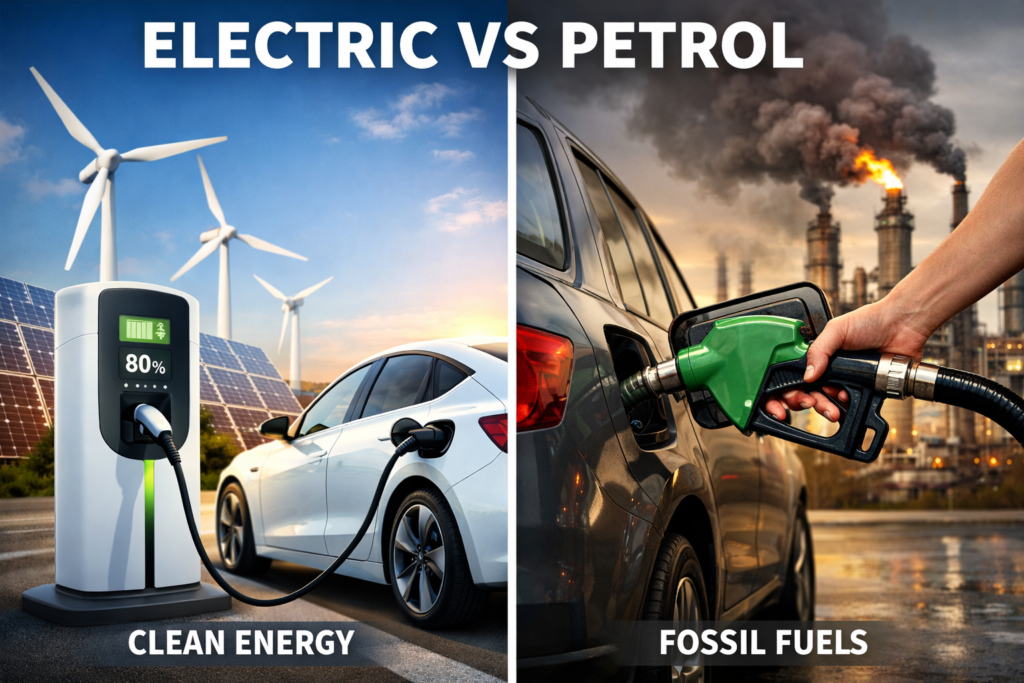
Electric Cars vs Petrol Cars
The car industry is changing fast. With rising fuel prices, growing environmental concerns, and new technology, electric vehicles (EVs) are becoming more popular than ever. At the same time, petrol cars are still very common because they are reliable and easy to use. So if you’re planning to buy a car or just curious about the future of vehicles, it’s worth understanding the key differences between electric cars and petrol cars.
Electric Cars vs Petrol Cars: Running Cost Comparison
One of the biggest benefits of electric cars is the lower running cost. Instead of petrol, EVs run on electricity, which is usually much cheaper. Charging an electric car costs far less than filling up a petrol tank. For people who drive daily, especially for commuting, this can save a lot of money every year.
Petrol prices also keep changing and often increase, which can make petrol cars more expensive to run in the long term. Because of this, EVs are becoming an attractive option for people who want to reduce fuel expenses.
Electric Cars vs Petrol Cars: Maintenance and Servicing
Maintenance is another area where electric cars have an advantage. EVs have fewer moving parts compared to petrol cars. They don’t require engine oil changes, spark plug replacements, or complex engine repairs. This means owners usually spend less on servicing and maintenance.
Petrol cars, on the other hand, have internal combustion engines that need regular care to keep them running smoothly.
Electric Cars vs Petrol Cars: Range and Refueling
That said, petrol cars still have some practical advantages. One major benefit is range and refueling convenience. Petrol vehicles can usually travel longer distances on a full tank compared to many electric cars on a single charge.
Refueling is also quick—you can fill a petrol tank in just a few minutes at any fuel station. Charging an electric car, however, can take anywhere from around 30 minutes at a fast charger to several hours with a home charger. In many areas, charging stations are still growing, which can make EV ownership a bit challenging for some people.
Electric Cars vs Petrol Cars: Performance Comparison
When it comes to performance, electric cars are surprisingly impressive. Electric motors provide instant power, which means quicker acceleration and a smoother driving experience. Many drivers also enjoy the quiet and vibration-free ride that EVs offer.
Petrol cars still perform well, especially in high-performance or sports models, but electric vehicles are quickly catching up and even outperforming traditional cars in some cases.
Electric Cars vs Petrol Cars: Environmental Impact
Another major reason people are considering electric vehicles is their environmental impact. EVs do not produce tailpipe emissions, which helps reduce air pollution in cities.
Petrol cars release carbon dioxide and other pollutants that contribute to climate change and poor air quality. Although electricity production still affects the environment, the growing use of renewable energy is making EVs a cleaner option overall.
Conclusion: Electric Cars vs Petrol Cars
In the end, both electric cars and petrol cars have their pros and cons. Electric vehicles offer lower running costs, less maintenance, and a cleaner driving option. Petrol cars, however, still provide longer range and faster refueling, which makes them more convenient for long-distance travel.
As technology improves and charging networks expand, electric vehicles will likely become even more popular in the coming years. The choice between electric cars and petrol cars ultimately depends on your driving habits, budget, and lifestyle.